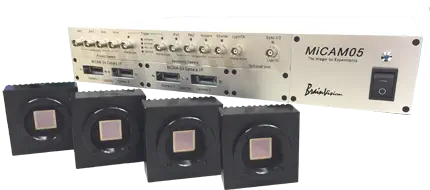
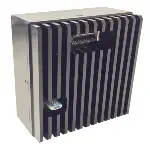
MiCAM05-N256 is a high-speed optical mapping system that captures
and visualizes small changes in fluorescence intensity from
biological samples stained with fluorescent probes, such as voltage
sensitive dye and calcium dye.
This product is for research use only (RUO).
Main Features
Spatial Resolution
256 x 256 - 32 x 32 pixels
Image Sensor Size
17.6mm x 17.6mm
S/N Ratio
> 71dB
Camera Port
4
Memory
4GB
Maximum Frame Rate
1,923fps (256 x 256px) 5,556fps (128 x
128px) 20,000fps (32 x 32px)
Intrinsic optical signal imaging based on hemoglobin and
flavoprotein autofluorescence
Ratiometric fluorescence imaging with 2 camera heads
Panoramic imaging with 2-4 camera heads
Other high speed imaging
Sample Data
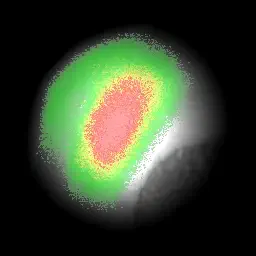
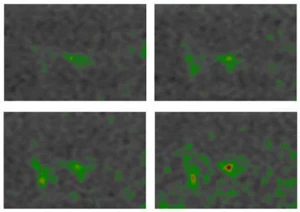
Voltage Sensitive Dye Imaging using MiCAM05-N256
Sample
Brain Slice
Method
Electrical stimulation
Fluorescence Dye
Voltage sensitive dye (Di-4-Anepps)
Mapping System
MiCAM05-N256
Pixels
256x256
Frame Rate
1,000fps (1.0msec/frame)
Provided by
Dr.Takashi Tominaga, Institute of Neuroscience, Tokushima Bunri
University
High-Speed Calcium Imaging of Isolated Mouse Atrial Cardiomyocytes
Sample
Freshly isolated mouse atrial cardiomyocytes. Cells were plated on
glass cover slips coated with laminin and used on the same day as
isolation.
Method
Cells were paced by electrical field applied through a perfusion
solution. Imaging was performed on Nikon DIAPHOT 300 microscope with
20X lens and SPECTRA-X Lumencor light source.
Fluorescence Dye
Calcium sensitive dye (Fluo-4 AM)
Mapping System
MiCAM05-ULTIMA
Pixels
100x100
Frame Rate
200fps (5.0msec/frame)
Provided by
Dr. Roman Medvedev and Dr. Alexey Glukhov, Department of Medicine,
University of Wisconsin-Madison
Brochure Download
High Speed Optical Mapping System MiCAM Series (2019)
MiCAM05-N256 and MiCAM03-N256
Features : Camera Head
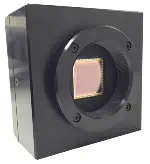
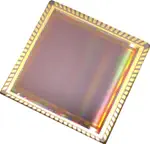
N256 camera head is equipped with a new CMOS image sensor designed
and developed by Brainvision Inc.
Large Sensor and Large Pixel
Active Area size
17.6mm x 17.6mm
Pixel size
69μm x 69μm
Applications such as membrane potential imaging require both very high
speed, and the ability to detect small changes in fluorescence, such as
0.5-1%. In order to optimize S/N ratios, it is important to increase the
amount of light captured by one pixel. It is easy to collect light and
capture small changes using a sensor having large pixels.
High Spatial Resolution, High Frame Rates, and High S/N Ratios
Number of Pixels
256 x 256 pixels
Maximum Frame Rate
1,818 fps (at 256x256 pixels)
Dynamic Range
71dB
The overall performance has been improved in a balanced manner. This
includes maximum frame rate, spatial resolution, and S/N ratios, all of
which are important factors for high-speed membrane potential imaging.
Wide Dynamic Range Mode or High Sensitivity Mode by Adjustable Well
Depth
Wide Dynamic Range Mode
3,000,000 electrons
High Sensitivity Mode
600,000 electrons
It is now possible to easily switch the full well capacity of the camera
in the acquisition software. Two modes are available: wide dynamic range
mode (D-mode), and high sensitivity mode (S-mode). D-mode is used for
tissue samples with high fluorescence light intensity, and S-mode is
used for cultured cell monolayers, or preps with low fluorescence light
intensity. This adjustable well depth makes it possible to image a
variety of biological samples using a single camera.
ROI Readout for Higher Frame Rates
Preset partial readout setting and multiple ROI setting can be selected,
and as a result it is possible to achieve higher frame rates. For
example, ultra high frame rates such 20,000 fps@32x32 pixels is
possible.
All pixels readout (256x256 pixels)
Multiple ROI readout (32x32x9 pixels)
Features : Processor
Direct Data Saving and Long-Term Data Acquisition with USB3.0 High-Speed
Data Transfer
New USB3.0 interface allows for significantly faster data transfer from
processor to PC. It is now possible to save data directly to HDD or SSD,
and long-term recording of several minutes up to a few hours can be
achieved, regardless of the RAM capacity (Note that sampling rate,
number of pixels, number of cameras used, and PC specifications, will
affect the total recording time).
Approximate number of recordable frames and recordable time
Disk Capacity
Pixels
Frame Rate (fps)
Number of recordable frames
Recordable time (min)
SSD 1TB
256x256
500
6,840,000
228.0
1,000
6,840,000
114.0
1,818
6,840,000
62.7
128x128
500
27,360,000
912.0
1,000
27,360,000
456.0
5,263
27,360,000
86.6
(*Approximate number of recordable frames and recordable time shown
above are averaged values that were measured using the PC configuration
which is included with MiCAM05. There is no guarantee that the results
will be the same in all circumstances.)
Up to four cameras can easily be connected and used in a completely
synchronized multi-camera system
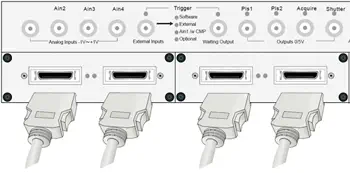
Up to two camera interface boards can be connected to the MiCAM05
processor. Each interface board is equipped with two camera ports,
therefore up to four of the same type of camera head can be connected at
any time. This allows for simultaneous imaging of multiple fluorescent
wavelengths, as well as three-dimensional imaging from different angles.
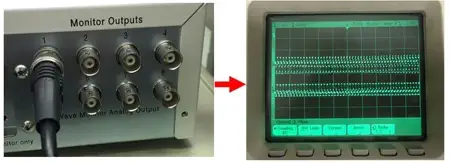
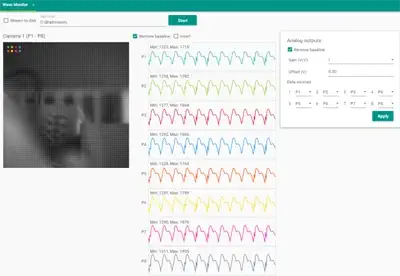
Continuous output of light intensity is available as a standard function
The light intensity monitor/continuous output function, available as an
optional component of MiCAM Ultima (DAC/ADC expanding unit), is
available as standard equipment with MiCAM05. This function is designed
to output the light intensity changes of up to eight user selected
pixels via eight BNC connections. Therefore, waveforms of fluorescence
change can be monitored and output before, during, and after data
acquisition. It is also possible to monitor the change in light
intensity in real time, using optional software.
Light intensity outputs from eight BNC connections
Wave monitor on software
Synchronous Lighting Control of LED Light Source for Multi-Wavelength
Excitation Imaging (Optional)
In the case of imaging using multiple fluorescent probes with different
excitation wavelengths or imaging using a two-wavelength
excitation/single-wavelength fluorescent probe, it is necessary to
synchronize the frame timing of the camera and the lighting timing of
the light source.
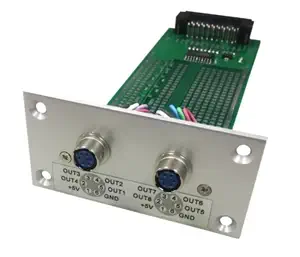
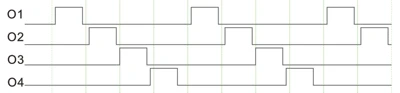
This function is to output the lighting signal synchronized with each
frame timing from MiCAM05 to multiple LED light sources. This makes it
possible to easily synchronize the frame acquisition with MiCAM05 and
LED lighting.
There are up to 4 channels of output. Preset patterns, in which signals
are output alternately from each channel, are available. There is no
need to set the lighting pattern using a commercially available pulse
generator.
Moreover, since the pulse delay time and pulse width can be specified by
software, it is possible to make detailed settings in accordance with
the rise and fall times of the LED used.
Two-wavelength excitation for GCaMP imaging using LEX9 and MiCAM
Various I/O Connectors, and Improved Compatibility with External Devices
MiCAM05 has multiple input and output connections available, in
comparison to previous MiCAM systems. These universally standard I/O
connections can be synchronized with image acquisition and external
devices. An additional slot has been added to MiCAM05 so that
customization is also available, depending on the research application.
Automatic Light Control and Adjustment of Light Intensity
In addition to the “Shutter” output terminal for controlling the timing
of illumination in synchronization with image acquisition, there is a
“LightCtl” signal output terminal for automatically adjusting the
intensity of the excitation light. In this way, light intensity or
saturation percentage of the image captured by the camera, can be
adjusted using the software. As the background light intensity becomes
similar throughout an experiment and even for different biological
preps, the experimental repeatability can be improved.
Other Features
Turnkey System Ready for Immediate Use
The system consists of hardware/software specifically designed for
high-speed fluorescence imaging, and the PC and monitor are included as
standard equipment. Before use, calibration/setting/tuning is not
necessary. The hardware connection is straightforward between components
using cables, making it possible to acquire data immediately after
setup.
Pre-Post Trigger Mode
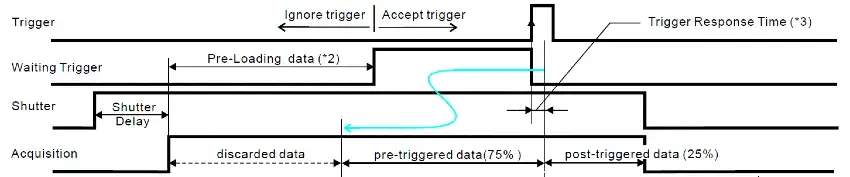
MiCAM05 can record activity which occurs before and after a trigger
signal is generated. When an external trigger occurs, such as a
spontaneous biological signal, or a trigger pulse from an external
stimulator, a specified amount of "pre-trigger" data can be saved. The
"post-trigger" data is also collected in the same recording. As a
result, both pre-trigger data and post-trigger data can be saved within
one acquisition period.
Pre-Post Trigger Mode (75% Pre-Trigger)
Time Lapse Imaging
MiCAM05 can capture phenomenon that changes in a few minutes up to
several hours, intermittently. Because illumination light is turned on
only at the time of image acquisition, phototoxic effects to sample is
minimized, and a stable baseline can be acquired.
Example of Time-lapse imaging
High Resolution Camera Control Function (Optional)
It is possible to control a high resolution camera having 1920x1200
pixels (BV-XB1 camera). High resolution imaging can be applied to
various applications, including detection of intracellular Ca 2+
dynamics, flavoprotein fluorescence, FRET imaging, and also imaging of
animal behaviors. High resolution imaging with BV-XB1 can also be
synchronized with MiCAM05 high-speed imaging.
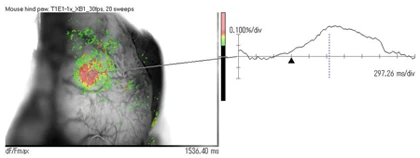
BV-XB1
Example of flavoprotein imaging
Software
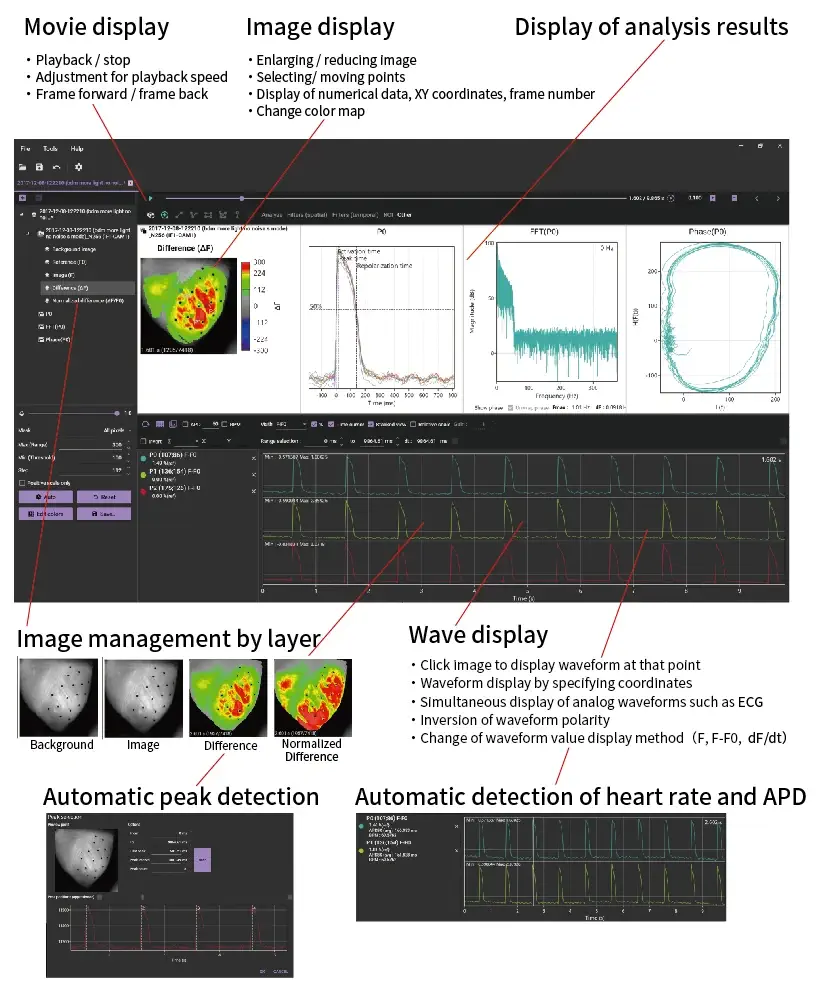
Acquisition/Analysis Software (BV Workbench)
BV Workbench is the image acquisition software that controls
MiCAM05-N256 optical mapping system. In addition to image acquisition
and control of inputs and outputs of the imaging system, analysis
functions including movie playback, wave display, filter functions,
etc…are also included. BV Workbench has an intuitive user interface that
is easily operated with the use of a mouse.
Cardiac Optical Mapping Data Anaysis using BV Workbench Version 4.5.1
Specifications
System
Name
High Speed Optical Mapping System
MiCAM05-N256
High Speed Optical Mapping System
MiCAM05-HR
Model
MC05-N256
MC05-HR
Standard System Configuration
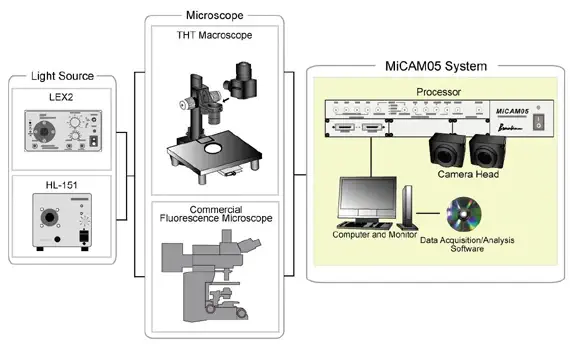
Camera Head (1-4), Processor, PC, Monitor,
Acquisition software, Analysis Software
Original M42 mount
(flange back:14.5mm)
(Option: C or F mount)
C mount
Interface
Special Cable
Special Cable
Dimension (WxHxD)
80mm x 80mm x 50mm
62mm x 52mm x 46mm
Weight
474g
100g
Processor
Name
MiCAM05 processor
Model
MC05-PRC
Camera Interface
1 (up to 2)
Camera Port
2 (up to 4)
Slot for Optional Unit
1
Buffer Memory Inside Processor
4GB (up to 8GB)
Analog Inputs for Synchronous Recording
4ch
Output for Stimulation Pulse
2ch
Input for External Trigger Signal
1ch
Output for Lighting Control
1ch
Input/Output for Frame Timing
1ch
Output for Real Time
Light Intensity Monitor
8ch
Output for Light Intensity Control
2ch
Current Output
2ch
Output for Acquisition Status
1ch
Output for Trigger Wait Status
1ch
Digital I/O port
1 (25 pins)
Trigger Mode
Software / TTL External Input / Analog Input / Usage of Optional
Unit
Data Transfer Mode
USB3.0 (for basic functions) / USB2.0 (for Real Time Light
Intensity Monitor)
Recording Mode
Temporary storage to PC RAM / Direct data saving to PC drive
(SSD/HDD)
Maximum Recordable Frame Number
Dependent on camera used and image acquisition settings
Power Supply
AC100V-230V、50Hz/60Hz 150W
Fuse
T2A L 250V
Dimension
430mm (W) x 350mm (D) x 75mm (H)
Weight
6.2kg
Default/Optional Function
Single Trial Acquisition
Default
Long Time Acquisition
(direct saving to disk)
Default
Averaging Acquisition
Default
Multiple ROI Readout for
Higher Frame Rate
Default
Time-Lapse Acquisition
Default
High Resolution Camera Control
Option (sold separately)
Acquisition software
Default
Analysis software
Default
SDK (for Visual C# .NET and MatLab)
Option (sold separately)
* Specifications and appearance are subject to change without prior
notice due to continuous improvements. * This product is for research use only.* This product is made in Japan.
Selectable Number of Pixels and Maximum Frame Rate (N256 Single Camera)
Selectable Number of Pixels (HxV)
Maximum Frame Rate (fps)
NR Mode OFF
NR Mode ON
2 Times Averaging
NR Mode ON
4 Times Averaging
256x256
Full Resolution
1,818
1,923
1,031
192x192
Square ROI
2,941
3,125
1,695
128x128
5,263
5,556
3,333
64x64
12,500
12,500
8,333
256x128
Horizontally Long
Rectangle ROI
3,333
3,448
1,887
256x64
5,882
5,555
3,226
256x32
9,091
8,333
5,000
128x256
Vertically Long
Rectangle ROI
3,030
3,333
1,852
64x256
4,348
5,000
3,125
32x256
5,556
7,143
4,762
32x32
16 blocks
2,381
2,632
1,724
15 blocks
2,500
2,778
1,818
14 blocks
2,703
2,941
1,961
13 blocks
2,857
3,125
2,083
12 blocks
3,125
3,448
2,273
11 blocks
3,333
3,704
2,439
10 blocks
3,704
4,000
2,703
9 blocks
4,000
4,348
2,941
8 blocks
4,545
5,000
3,226
7 blocks
5,000
5,556
3,704
6 blocks
5,556
6,250
4,167
5 blocks
6,667
7,143
5,000
4 blocks
7,692
8,333
5,882
3 blocks
10,000
11,111
7,692
2 blocks
12,500
14,286
10,000
1 blocks
20,000
20,000
16,667
Selectable Number of Pixels and Maximum Frame Rate (N256 Dual Camera)