1. Top
  2. Neuronal Imaging
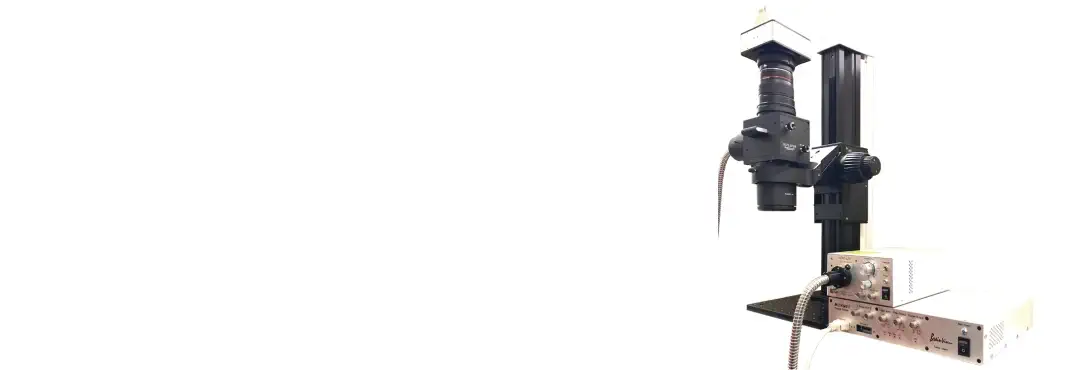
  3. MiCAM02: Overview

Neuronal Imaging MiCAM ULTIMA

Overview

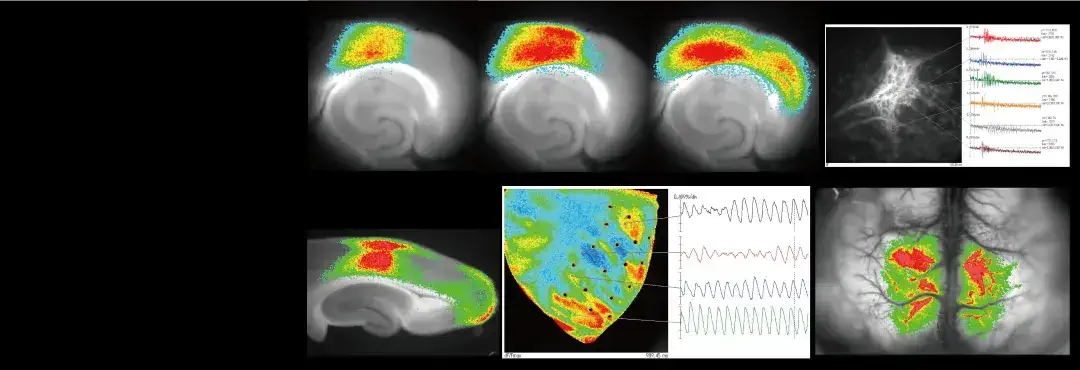
The signal to noise ratio of a camera system is very important for imaging. In general, the signals detected from membrane voltage-sensitive dyes are extremely small. The detection of signals from voltage sensitive dyes requires an ultra-sensitive high speed camera.

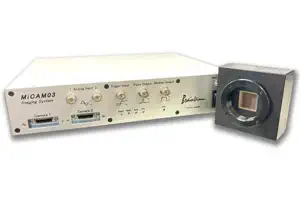
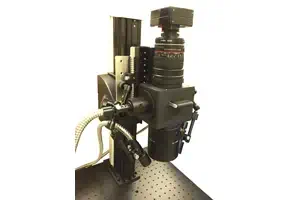
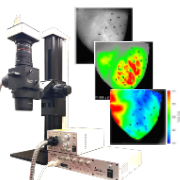
MiCAM02 has achieved the highest S/N ratio among CCD cameras. It is very effective for the imaging of neuronal activity. MiCAM02 is designed for the following applications: intrinsic signal imaging, calcium ion imaging, membrane voltage imaging, time-lapse imaging, and general-high speed-imaging.

Description

MiCAM02 has been developed as the next generation of MiCAM01 by BrainVision Inc. MiCAM01 has already achieved a high level of success among high speed imaging systems. MiCAM02 maintains the basic concepts of MiCAM01 such as high speed and high S/N ratios, but it has been significantly improved with regards to spatial resolution, sensitivity, and dark noise/read-out noise levels. Additional software functions including the ability to do time-lapse recordings, have also been implemented.

MiCAM02 can image at speeds up to 1 kHz (MiCAM02-HS), with 75% real quantum efficiency (MiCAM02-HR), and over 68db dynamic range. These cameras can be used for both of calcium ion and membrane voltage imaging applications.


Features

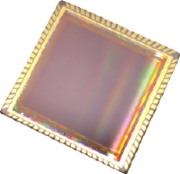
1/5" CCD camera and 1/2" CCD camera are available
Maximum frame rate is 1 kHz

The imaging of neuronal activity, which requires the ability to detect very weak signals, adopts averaging (or accumulation) methods in most cases. MiCAM02 can be used for most experiments by utilizing the averaging method or by recording single sweeps of activity. Both 1/5" CCD and 1/2" CCD cameras are available for making imaging area sizes or frame rates suitable for a wide range of experiments.

Spatial resolution is adjustable according to frame rate

Spatial resolution of MiCAM02 is varied at 48x32, 96x64, 192x128 and 384x256 pixels according to the frame rate selected. This flexibility with regards to binning provides higher spatial and temporal resolution.

Powerful in dark light levels

The new "H-bin mode" function reduces dark noise, and it is comparable to that of a cooled-CCD camera. This function is very effective for situations of dark light or fluorescence.

Synchronized Dual-camera system for dual-wave length imaging

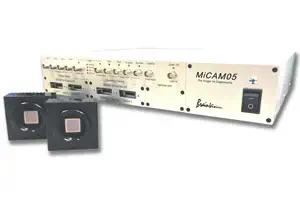
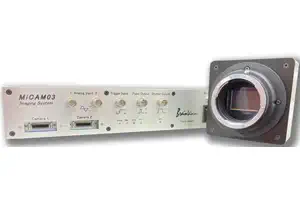
MiCAM02 processor has two camera ports, and can be adapted as a dual-camera system using an optional second camera, which enables synchronized recordings. The dual-camera system can be used for the ratio-imaging with voltage-sensitive dyes or calcium ion indicators, as well as imaging with multiple probes.

User-friendly software

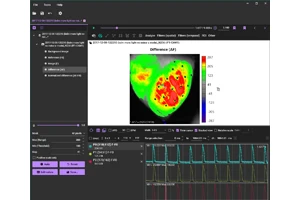
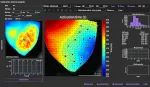
Data analysis software "BV_Analyzer," which has many useful functions, also includes acquisition capabilities resulting in simpler, smoother, and faster experiments. The quick analysis ability of recorded data makes it possible for users to do many experiments on a single biological sample under various conditions.

Applications

  • Imaging of intrinsic signals of brain activities in animals
  • Imaging of membrane potential using voltage-sensitive dye, such as Di-4 ANNEPS
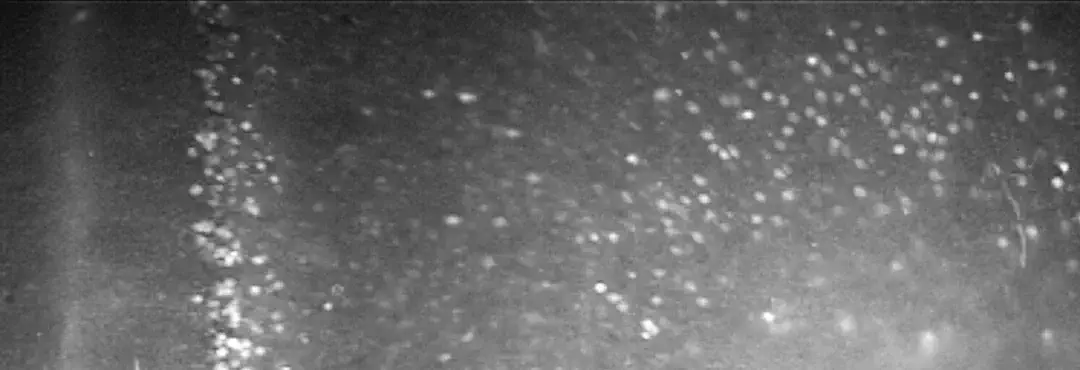
  • Fast/Time-lapse imaging of calcium ion indicators such as fluo-4 or calcium-green
  • Ratiometric imaging of fluorescence using dual-camera system
  • Brain slice, tissue block, in vivo etc.

Page top


Neuronal Imaging